
PUNOVIX Blog
How to Start an Online Business: A Practical Guide
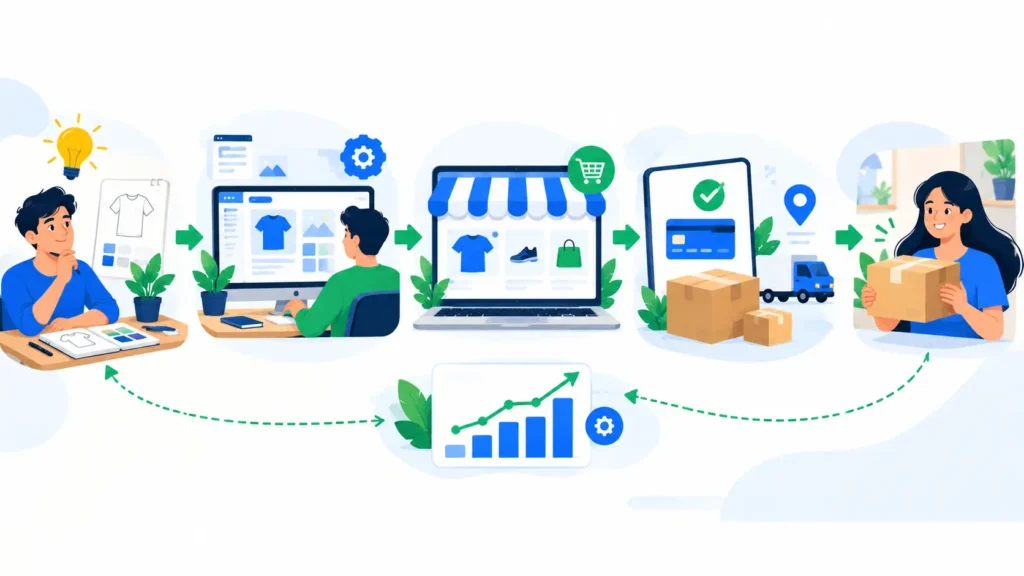
Starting an online business can help you turn a skill, product idea, or area of knowledge into a service or product customers can access online. You might want to freelance, open an online store, sell digital products, teach a skill, or build a content-based business. The opportunity is real, but success is not automatic. A good idea still needs customers, a workable offer, careful cost planning, and reliable delivery.
This guide explains how to start an online business in practical steps. You will learn how to validate an idea, choose a business model, estimate your costs, create an online presence, find customers, and measure results. The goal is not to promise instant income; it is to help you make informed decisions and build something that solves a genuine problem.
If you are exploring how to start an online business for beginners, begin with one clear customer need rather than trying to launch several ideas at once. A small test can teach you more than building a complex store before checking demand.
What Is an Online Business?
An online business sells products, services, information, or access through digital channels. Some businesses operate entirely online, while others use the internet to find customers for services delivered offline.
Common models include:
Freelance services such as writing, design, web development, editing, or bookkeeping support.
Online tutoring, workshops, and skill-based coaching.
Ecommerce stores selling physical products.
Digital products such as templates, guides, design assets, and downloadable planners.
Affiliate content that earns commissions from qualifying referrals.
Blogs, newsletters, and educational media supported by advertising, sponsorships, subscriptions, or related products.
Virtual assistance, consulting, and other remote professional services.
The right model depends on your skills, customer demand, available time, and budget. A service business may avoid inventory costs, while an ecommerce business may require suppliers, shipping arrangements, and return handling. Neither model is automatically profitable.
Step 1: Choose a Specific Business Idea
Start by listing your practical skills, experience, interests, and resources. Then look for a customer problem you can solve reliably. Your interests matter, but demand matters too: customers must value the outcome enough to take an action, such as paying, booking a call, or requesting a quote.
A simple way to compare ideas is to ask five questions:
Do I understand the customer and the problem?
Can I deliver a useful solution at an acceptable quality level?
Can I reach likely customers without spending beyond my means?
Can the price cover direct costs and the time needed to deliver?
Can I test the idea in a small, low-risk way?
For example, someone with graphic design skills could offer a defined package of social media creatives to a specific kind of small business. A tutor could test one online workshop before recording a complete course. A seller could interview potential buyers and compare supplier samples before ordering inventory.
When planning how to start an online business at home, consider your workspace, internet connection, equipment, household schedule, and the type of customer information you may handle. Working from home can reduce some overheads, but it does not eliminate business costs or the need for a reliable routine.
Learning how to start an online business becomes easier when you choose one specific customer problem and test a practical solution before expanding.
Step 2: Research Customers and Competitors
Before spending money, learn what potential customers need and how they currently solve the problem. Read relevant product reviews, study competitor offers, talk to prospective customers, and look at questions people ask in relevant communities. Competitor research is not about copying another brand; it helps you understand expectations and identify gaps you may be able to address.
Try asking potential customers:
What is the most frustrating part of solving this problem?
What have you already tried?
What matters most when choosing a product or service?
What would make an offer trustworthy and useful?
How do you prefer to discover, buy, and receive the solution?
Look for evidence rather than relying only on encouraging comments. “That sounds interesting” is not the same as an order. Stronger signals may include a paid pilot, a booking, a request for a proposal, or repeated questions about price and availability.
Research can also reveal how competitors price their offers, handle delivery, support customers, and explain return terms. Use this information to define your difference: perhaps you serve a narrower audience, provide clearer instructions, respond faster, or bundle related services in a convenient way.
Step 3: Validate the Idea Before Building Everything
Validation means checking whether real people show meaningful interest in your offer. It does not require a large website or an expensive advertising campaign.
For anyone learning how to start an online business for beginners, a small pilot offer can reveal whether customers are interested before a larger investment is made.
Depending on your model, you could:
Create a simple landing page describing the offer and inviting enquiries.
Prepare a sample design, lesson, prototype, or short demonstration.
Offer a limited pilot to a small group of suitable customers.
Ask for feedback on two clearly described packages.
Publish a useful article or video and track relevant responses.
Take pre-orders only when you clearly explain the expected delivery date, payment terms, and refund policy.
Set a basic success measure before testing. For example, count qualified enquiries, paid pilot orders, completed bookings, or email sign-ups from the intended audience. Record what you tested and what happened. If response is weak, review the audience, problem, offer, and price before deciding whether to change direction.
Be careful with claims about likely income. Results depend on customer demand, competition, quality, pricing, and execution. Validation reduces uncertainty; it does not guarantee future sales. This is a practical way to learn how to start an online business before committing significant money to a full launch.
Step 4: Choose a Business Model and Pricing Method
Once you have evidence of demand, decide how you will deliver value and earn revenue. Common options include project fees, hourly work, product margins, subscriptions, commissions, retainers, or course fees. Choose a model customers can understand and that can cover the cost of providing the offer.
For a service, describe exactly what the customer receives, what is excluded, how many revisions are included, and when work will be delivered. For a physical product, calculate product cost, packaging, shipping, marketplace or payment fees, returns, and support. For a digital product, include creation time, updates, platform fees, support, and promotion.
| Cost or decision | Questions to answer |
|---|---|
| Direct cost | What does one product or delivery cost? |
| Platform and payment fees | What charges apply to each sale? |
| Time | How many hours are needed to create and deliver the offer? |
| Marketing | What will it cost to reach likely customers? |
| Support and returns | What time or money is needed after the sale? |
| Price | Does the price cover costs and leave an acceptable margin? |
Do not price only by copying competitors. Your costs, quality, scope, customer segment, and positioning may be different. Test pricing transparently and review actual results rather than assuming a low price will always attract the right customers.
A practical way to decide how to start an online business is to compare customer demand, delivery costs, and the time each business model requires.
Step 5: Plan Startup Costs and Cash Flow
You do not need to purchase every tool or service before beginning. Start with the essentials required to test and deliver your offer. Depending on the business, these may include a device, internet access, domain and hosting, a basic website, design or productivity software, payment processing, packaging, or a small amount of stock.
Separate one-time setup expenses from recurring costs. One-time costs may include a prototype or equipment. Recurring costs can include hosting, software, marketplace fees, internet access, advertising, shipping, and professional support. Leave room for refunds, slow months, replacement equipment, and unexpected expenses. A simple cash-flow sheet can make sales, due dates, and expenses easier to track.
A business may show sales but still have cash-flow pressure if suppliers must be paid before customer invoices are settled. For product businesses, avoid tying too much money up in inventory until you understand demand and product turnover.
Can You Start an Online Business Without Money?
People searching how to start an online business without money are often trying to find a way to test an idea with minimal upfront spending. In practice, “zero investment” is rarely literal. Even a service business may need internet access, equipment, learning time, or platform fees. A more useful goal is to reduce avoidable spending while proving demand.
You could begin with a skill you already have, use free tools where they are sufficient, prepare a sample portfolio, contact potential clients directly, or use an existing marketplace after checking its terms and fees. Avoid borrowing money or buying expensive courses and software before you understand the customer and the service you plan to deliver.
If you are evaluating how to start an online business without money, list every expected cost, including time and charges that appear after a sale. Identify the tools you already own, work out the minimum necessary spending, and avoid recurring subscriptions until there is a clear need. Be honest about free tools’ limits and what may become necessary as the business grows. No upfront spending does not mean no risk.
When considering how to start an online business without money, begin with an existing skill, free tools where suitable, and a clearly defined service that you can deliver reliably.
Step 6: Create Your Online Presence
Your online presence should make it easy for people to understand your offer, assess whether it suits them, and contact you or complete a purchase. Depending on the model, you may use a website, a landing page, a marketplace listing, or a professional profile. A website can provide more control over presentation and customer journeys, but choose a setup you can maintain.
People deciding how to start an online business at home should choose an online setup that fits their available space, working hours, and customer service needs.
Include the essentials:
A clear explanation of what you offer and whom you help.
Accurate product or service details, examples, and pricing or a clear enquiry process.
A visible contact method and reasonable response expectations.
Relevant shipping, return, refund, privacy, and service terms.
A mobile-friendly layout with working links and forms.
A simple way to record enquiries and sales.
If you build a website, use descriptive page titles, logical headings, useful links, and accurate information. Google’s official SEO Starter Guide explains ways to make content understandable to search engines and helpful to visitors. SEO can support discovery, but it does not guarantee rankings or immediate traffic.
Choose a business name that is clear and appropriate, and check its availability before investing in branding or packaging. Use your own or properly licensed images, fonts, templates, and other creative assets. Do not use someone else’s logo, product photography, or protected content without permission.
For a wider introduction to online channels, see PUNOVIX’s digital marketing guide for beginners. It explains how search, content, social platforms, email, and measurement can work together toward a business goal.
Step 7: Set Up Payments, Delivery, and Customer Support
A customer should know what happens after placing an order or requesting a service. For digital services, define how project details are collected, how progress is approved, when invoices are due, and how files are delivered. For physical products, plan inventory, packing, shipping, tracking, damaged items, and returns. For courses or downloads, test access instructions and provide a way for customers to request help.
Use reputable payment providers and follow their security and verification requirements. Do not ask customers to send sensitive payment credentials through insecure messages. Keep order confirmations, receipts, and business records organized. If you sell through a marketplace, read its current seller policies, fee schedule, customer service rules, and dispute process before listing products.
Good customer support can build confidence and reveal where your process is confusing. Prepare concise answers for common questions, set realistic response times, and handle complaints respectfully. Do not promise delivery dates or service results you cannot reasonably meet.
Step 8: Understand Business Registration and Compliance in India
The correct legal, tax, and registration requirements depend on your activity, turnover, business structure, customer locations, products or services, and sales channel. For people researching how to start an online business in India, the right compliance checklist depends on the chosen model and individual circumstances. There is no single checklist that applies identically to every online business.
Before deciding how to start an online business in India, identify the registrations, tax obligations, and product-specific requirements that may apply to your chosen business model.
Before taking regular orders, find out which registrations, licences, records, invoices, consumer disclosures, and tax obligations apply to your specific situation. The Government of India’s Startup India legal and regulatory checklist is a useful starting resource. If you are considering Udyam registration for an eligible micro, small, or medium enterprise, use the official Udyam Registration portal; its information states that the registration process is free. Avoid unofficial sites that charge simply to access the official portal.
If you sell goods or services online, check the requirements that apply to your model instead of assuming every seller has identical obligations. The Department of Consumer Affairs publishes the Consumer Protection and E-Commerce Rules. Tax and GST applicability can be fact-specific, so confirm the current position with official guidance or a qualified professional before deciding what you must register for or file. Verify marketplace rules and product-specific permissions before listing regulated goods.
This section is general educational information, not legal or tax advice. Verify the latest requirements for your business, product category, turnover, and location before acting.
Step 9: Find Your First Customers
A new business needs a practical way to reach people who may value its offer. Choose one or two channels that suit your customer rather than trying to use every platform immediately.
A practical approach to how to start an online business is to focus first on the channels where your intended customers already search for solutions.
For example, a design freelancer may share relevant portfolio work and contact suitable businesses. A niche store may improve product listings and test a small set of search or social campaigns. A tutor may offer a sample class through relevant professional or community networks. A content business may publish helpful articles that answer the audience’s questions.
Useful early marketing activities include:
Publish a specific offer with a clear next step.
Share educational content that answers real customer questions.
Ask satisfied customers for honest feedback or referrals, with permission.
Build an email list through appropriate consent and transparent expectations.
Link related website pages when the link helps readers discover more useful information.
Track where enquiries originate and which activities lead to real conversations or sales.
Avoid buying fake followers, sending unsolicited bulk messages, making misleading income claims, or copying competitors’ content. These shortcuts can damage trust and create compliance problems. Marketing works best when the offer, audience, and customer experience are aligned.
A practical content plan can help you explain your offer consistently. PUNOVIX’s content marketing guide for small businesses covers ways to create useful content around customer needs. If your business needs to communicate with people who have opted in to receive emails, our email marketing guide for small businesses provides further ideas for useful customer communication.
Step 10: Measure, Learn, and Improve
Use a small set of metrics connected to the business goal. Depending on the model, these might include qualified enquiries, conversion rate, repeat purchases, average order value, delivery time, refund rate, customer acquisition cost, or profit after direct expenses. Website visits and social engagement may be useful, but they do not automatically mean that the business is earning money.
As you learn how to start an online business, use actual customer enquiries, sales, and expenses to decide what needs improvement.
Review performance on a regular schedule. Ask which offer attracted suitable customers, where people left the buying process, what questions appeared repeatedly, and which costs were higher than expected. Test one meaningful change at a time where practical. For example, clarify a product description, simplify a form, or compare two service packages.
Keep records of what you changed and what happened afterward. Avoid strong conclusions from a very small number of visitors or orders. Use customer feedback and actual transactions alongside analytics to decide what to adjust.
How to Start an Online Business at Home
A home-based business can reduce the need for a separate office, but it still benefits from a structured routine and clear boundaries. Decide where you will work, how you will protect customer information, when you will respond to clients, and how you will separate business money and records from personal spending.
If you handle physical products, consider safe storage, packaging space, courier pickup, and how returns will be managed. If you provide services, plan quiet work time, meetings, delivery deadlines, and backup arrangements for internet or equipment problems. Check any housing, local, product, or professional restrictions that may apply to your situation.
When considering how to start an online business at home, begin with an offer you can deliver reliably from your current setup. Upgrade equipment or workspace only when a demonstrated business need justifies the cost.
A Simple 30-Day Launch Plan
A 30-day plan is a way to organize your first experiment, not a promise that a business will become profitable within a month.
| Period | Main task | Practical output |
|---|---|---|
| Days 1–5 | Define an audience and problem | One-sentence offer and customer profile |
| Days 6–10 | Research demand and competitors | Notes on customer questions, alternatives, and pricing |
| Days 11–15 | Test the offer | Sample, prototype, landing page, or pilot proposal |
| Days 16–20 | Set up delivery and payment steps | Clear process, costs, and customer terms |
| Days 21–25 | Reach potential customers | Relevant conversations, enquiries, or test traffic |
| Days 26–30 | Review evidence | Results, costs, feedback, and next changes |
At the end of the month, decide whether to continue, modify the offer, or test a different approach. The useful outcome is better evidence and a clearer process, even if the first attempt does not generate many sales.
This step-by-step approach helps beginners understand how to start an online business by turning a broad idea into small, measurable tasks.
Conclusion
Starting an online business is a process of making and testing decisions. Choose a clear customer problem, research demand, create a small offer, calculate costs, and set up a reliable way to deliver value. Then reach potential customers through relevant channels and measure what happens.
If you are learning how to start an online business for beginners, you do not need to master every platform before you begin. Focus on one manageable experiment, keep expectations realistic, and improve based on real feedback. A useful online business grows from understanding customers and delivering consistently—not from promises of easy money.
Frequently Asked Questions
Q1. How do I start an online business with no experience?
Start with a problem you understand or a skill you can develop. Research the customer, learn the basics, create a small sample or pilot offer, and get feedback before making a large investment. Be transparent about your experience and only sell work you can reasonably deliver.
Q2. What is the easiest online business to start?
There is no single easiest option for everyone. A service based on an existing skill may require less spending on inventory, while a product business may involve sourcing, delivery, and returns. Choose the model that best matches your skills, time, customer access, and resources.
Q3. Can I start an online business without money?
You may be able to test an idea with very low upfront spending by using existing skills and free tools, but most businesses still involve costs such as internet access, equipment, time, or transaction fees. List all likely expenses and avoid treating “no investment” as a guarantee of zero risk.
Q4. Do I need to register an online business in India?
Requirements depend on the business structure, activity, turnover, products, sales channel, and other circumstances. Check official government guidance and seek qualified legal or tax advice where needed; do not assume the same registration rules apply to every business.
Q5. Do I need a website to start an online business?
Not always. Some businesses can test demand through a suitable marketplace or professional profile. A website can give you more control over information and the customer journey, but choose a platform that fits your business model and ability to maintain it.
Q6. How can I get my first online customers?
Define a specific offer, identify where suitable customers look for help, and use a small number of relevant channels. Show examples of your work, answer customer questions, ask for honest referrals when appropriate, and record which activities lead to actual enquiries or sales.
Q7. How long does it take for an online business to become profitable?
There is no reliable universal timeline. Results depend on demand, pricing, competition, delivery costs, marketing, and execution. Track revenue and expenses separately, and use early tests to improve your understanding rather than relying on guaranteed-income claims.
Related Business & Online Growth Articles
How to Grow a Small Business: 7 Practical Strategies
PUNOVIX Blog Growing a business is not simply about getting more customers. Sustainable growth means finding the right
Small Business Branding: How to Build a Memorable Brand
PUNOVIX Blog A memorable brand helps customers recognize your business, understand what makes it useful, and know what
Business Plan for Small Business Template: A Step-by-Step Guide
PUNOVIX Blog A business plan helps turn a business idea into a practical set of decisions. It explains